 English
  ไทย
ไทย 


News DETAILS
Share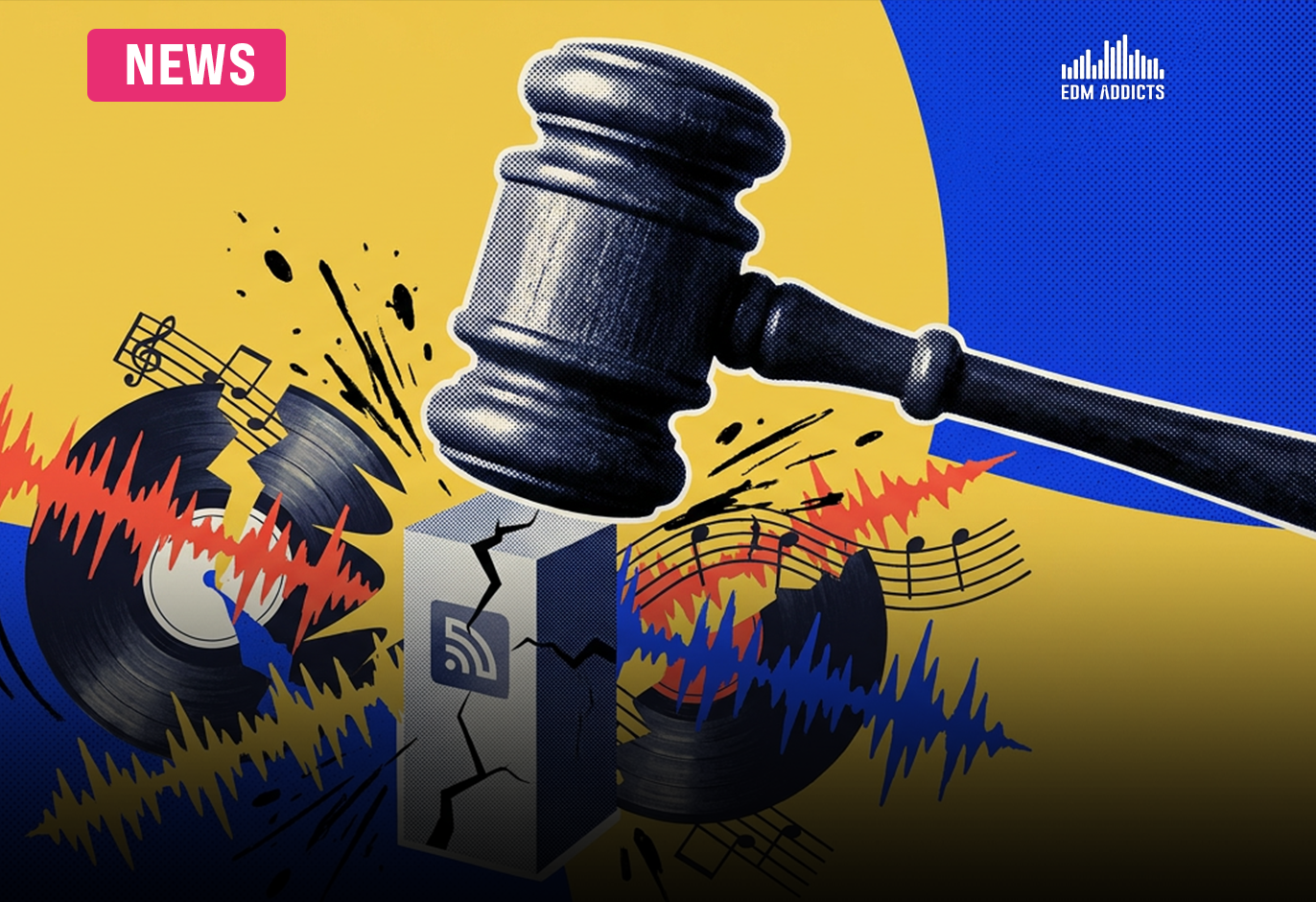
Suno AI music generator ruled to have infringed copyright by a German court, alongside a data breach exposing 55.3 million user accounts
German Court Rules Suno Infringed Copyright, Days After Hack Exposed Its Massive Music Scraping and a 55.3 Million-Account Data Breach
Suno, the US-based AI music company, has lost a landmark copyright case in Europe. The Munich I Regional Court ruled on July 31, 2026 that the company infringed the copyrights of songs represented by GEMA, Germany's music rights collecting society. Multiple outlets report it as the first ruling by a European court to find that an AI music generator infringed copyright through model training, and it landed less than two weeks after data from a hack of Suno's systems came to light, exposing the scale of its music scraping.
GEMA built the case around six songs: Forever Young and Big in Japan by Alphaville, Mambo No. 5 by Lou Bega, plus Atemlos durch die Nacht, Daddy Cool and Rasputin. The court found all six songs could still be reproduced from Suno's v3.5 and v4 models.
The heart of the ruling is memorization. The court held that when a model memorizes songs to the point of reproducing them, that counts as reproduction under Section 16 of German copyright law, and it rejected Suno's text-and-data-mining defense. The court also stated that training on GEMA songs in the US, as well as storing and reproducing them in Europe, violates both US and German copyright law.
As a result, Suno must stop reproducing the six songs without a license, stop using them to train its models, and disclose the revenue connected to the infringement so damages can be calculated. Suno said in a statement that it disagrees with the ruling and is considering its options, including an appeal.
The win is also GEMA's second AI court victory in Germany, following its earlier case against OpenAI over song lyrics.

- The Hack That Exposed Suno's Scraping From YouTube Music -
Rewind to mid-July: an anonymous hacker shared data taken from Suno's systems with the news outlet 404 Media. The breach itself happened around November 2025 but only became public now. Have I Been Pwned, the data breach lookup service, indexed the dataset on July 20, 2026 and found 55.3 million unique email addresses.
The leaked data ranges from names, addresses, emails, phone numbers and purchase histories to partial payment card numbers with expiry dates, along with Suno's internal source code. The hacker also accessed Stripe payment data belonging to hundreds of thousands of customers.
The part that hits the music industry directly is the source code from 2023-2024, which contains scripts for scraping songs and lyrics from YouTube Music, Deezer, Genius, Pond5, Jamendo, Freesound and IMSLP, as well as podcasts via RSS. One file in the code states that Suno had already scraped 2,013,545 music clips from YouTube Music alone, and the code even includes scripts hunting for a capella versions on YouTube to isolate vocals.
A Suno spokesperson told media the incident mostly involved legacy source code and a limited amount of user data, and that the company determined it was not required to notify users individually under applicable privacy laws. Have I Been Pwned's analysis, meanwhile, found large amounts of personal data in the leaked set.
The breach has now drawn two class action lawsuits at the U.S. District Court for the District of Massachusetts, the state where Suno is headquartered. The plaintiffs are two Suno users, Frank Rugnetta and Alec Pilavian, with the Alec Pilavian suit filed on July 24, 2026 seeking class status on behalf of all affected US users. The complaints allege Suno knew about the breach since November 2025 but never told its users, who only found out when the news broke in July 2026. They seek damages and a court order requiring Suno to provide credit monitoring for class members for at least 10 years.
Music Business Worldwide also reports that the leaked source code could strengthen the hand of Universal Music Group and Sony Music in the major labels' lawsuit against Suno in Boston, ongoing since 2024, where Suno is arguing fair use. Warner Music, by contrast, already settled with Suno in November 2025 through a licensing-plus-equity deal.
Related News
HITS Daily Double Reports Tame Impala and Dua Lipa as Coache...
Istanbul Governorship Blocks Anyma Show on September 12, No ...
2026 YG Global Audition in Thailand: Bangkok Auditions Novem...
John Summit Pulls Out of His Remaining August Shows and Fans...
Anyma Launches New Label AEDEN Records
Related News
HITS Daily Double Reports Tame Impala and Dua Lipa as Coach...
Istanbul Governorship Blocks Anyma Show on September 12, No...
2026 YG Global Audition in Thailand: Bangkok Auditions Nove...
John Summit Pulls Out of His Remaining August Shows and Fan...
Anyma Launches New Label AEDEN Records